
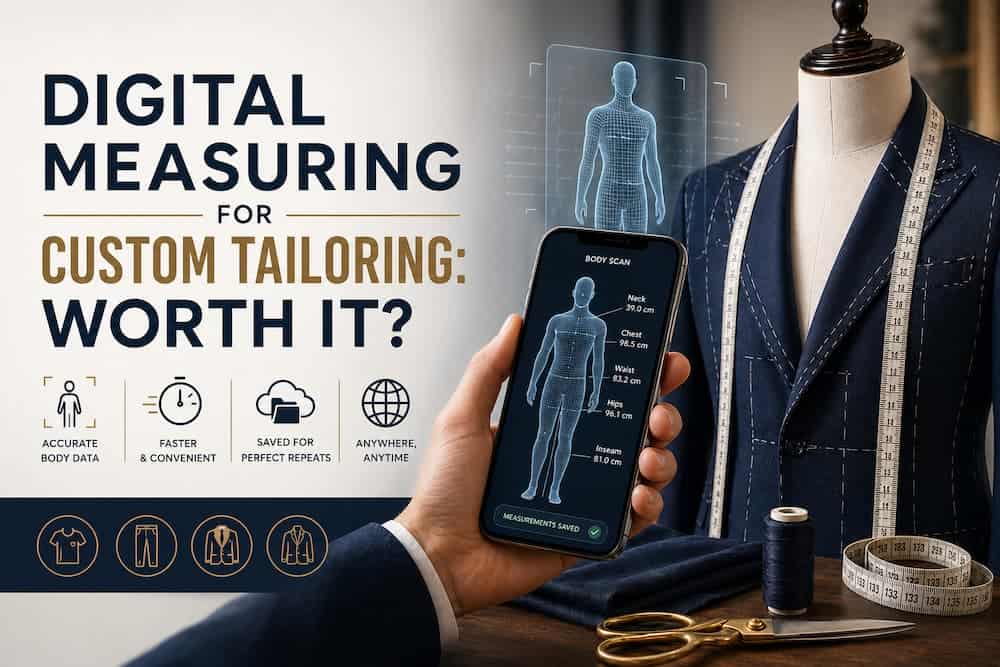
Custom tailoring has traditionally been associated with tape measures, chalk marks, in-person fittings, posture assessments, and the trained eye of an experienced tailor. For decades, this hands-on process defined how suits, shirts, trousers, and jackets were made. Today, however, technology is changing the industry. Digital measuring tools now promise faster fittings, remote ordering, improved accuracy, stored sizing data, and a more convenient path to custom clothing.
From smartphone body scans to in-store 3D scanners and AI-assisted sizing systems, digital measuring has become one of the most discussed developments in modern tailoring. Some buyers view it as the future. Others remain skeptical and prefer traditional craftsmanship only.
So, is digital measuring for custom tailoring worth it?The honest answer is yes, when implemented correctly. But like most tools, its value depends on expectations, implementation, and whether it is combined with human expertise.This guide explores how digital measuring works, its strengths, limitations, ideal use cases, and whether it makes sense for your next custom garment.
What Is Digital Measuring?
Digital measuring refers to technology used to capture body dimensions and fit data electronically rather than relying only on manual tape measurements.
Common Forms of Digital Measuring
- Smartphone body scan apps
- In-store 3D body scanners
- Guided self-measurement platforms
- AI size recommendation systems
- Existing garment data uploads
- Photo-based posture analysis tools
These systems aim to create a measurement profile that can be used for tailoring production.
Why Digital Measuring Has Gained Popularity
Modern customers often want:
- Convenience
- Faster ordering
- Remote access
- Repeatability
- Less time spent at fittings
- Easier international purchasing
Tailoring businesses also value:
- Data storage
- Standardized workflows
- Faster onboarding
- Easier repeat orders
- Scalable service models
How Traditional Measuring Works
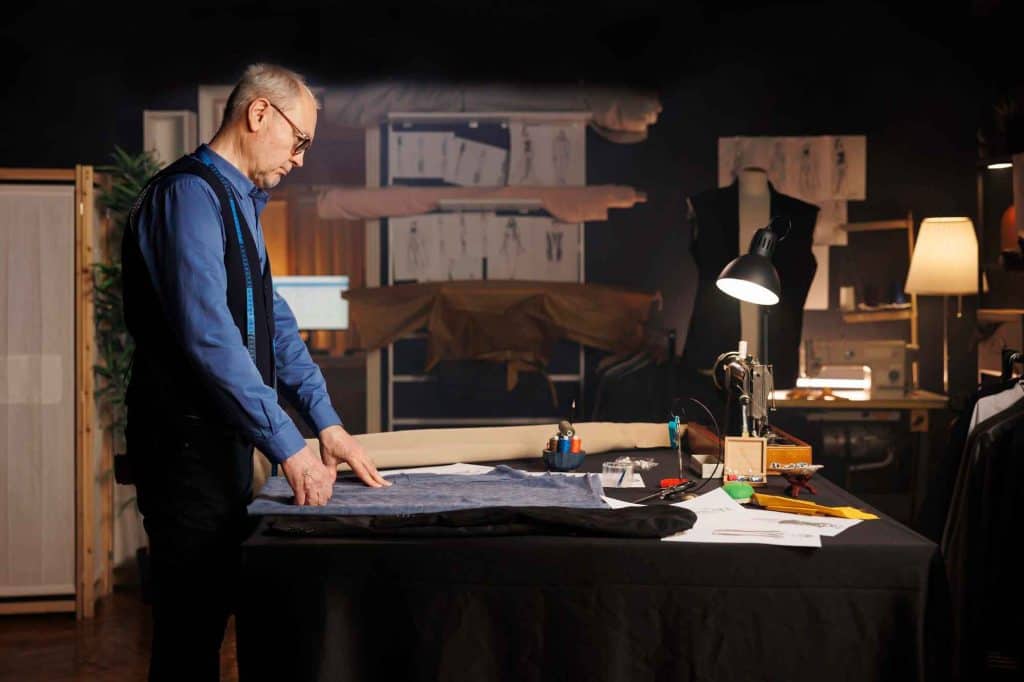
Before comparing the two, it helps to understand traditional measuring.
Traditional Tailor Measurements Often Include:
- Chest
- Waist
- Seat
- Shoulder width
- Sleeve length
- Jacket length
- Trouser inseam
- Rise
- Neck
- Wrist
- Posture notes
- Shoulder slope
- Stance observations
An experienced tailor also interprets how a body moves, stands, and carries tension.
That judgment element is extremely important.
How Digital Measuring Usually Works
Smartphone Scan Example
- User stands in fitted clothing
- Phone captures front/side angles
- Software maps body dimensions
- Data becomes measurement profile
- Tailor uses profile for garment production
In-Store Scanner Example
- Client stands in scanning booth or platform
- Scanner captures 3D body model
- Measurements auto-generated
- Tailor reviews and adjusts as needed
AI Size Systems
Some platforms use previous purchases, height, weight, age, and preference data to recommend sizes or tailoring adjustments.
Major Benefits of Digital Measuring
1. Convenience
This is often the biggest selling point.
Instead of scheduling multiple visits, a customer can begin the process remotely.
Best For:
- Busy professionals
- Travelers
- Overseas clients
- Repeat customers
- People with limited time
2. Faster Repeat Orders
Once data is stored, future garments become easier.
Example
| First Order | Future Orders |
| Full measurement setup | Quick reorders |
| Fit discussion required | Small updates only |
| More time needed | Faster process |
This is especially useful for shirts, trousers, and repeat business suits.
3. Measurement Consistency
Human measuring can vary slightly between sessions or staff members.
Digital systems can help create:
- Standardized records
- Easier comparison over time
- Better production continuity
4. Useful for International Clients
Someone visiting a city once may complete an in-person or digital profile, then reorder later from abroad.
This can be valuable for travelers who discover a tailor they trust.
5. Better Data Retention
Paper notes can be lost or interpreted inconsistently. Digital systems allow:
- Archived measurements
- Historical changes
- Order preferences
- Style notes
- Repeat garment tracking
Where Digital Measuring Performs Best
| Garment Type | Suitability |
| Shirts | Excellent |
| Repeat trousers | Strong |
| Repeat suits | Strong with prior fit history |
| Casual jackets | Good |
| First complex bespoke suit | Moderate |
| Highly posture-specific garments | Needs human review |
The Real Limitations of Digital Measuring
Technology is useful, but not magical.
1. It Measures Dimensions, Not Preferences
Two clients with identical body sizes may want very different fits.
One may prefer:
- Close waist suppression
- Slim trouser taper
- High armholes
Another may prefer:
- Relaxed comfort
- Fuller seat
- Wider leg opening
Digital scans often need human interpretation for style preference.
2. Posture Can Distort Results
If a client stands unnaturally during scanning:
- Chest lifted unnaturally
- Stomach sucked in
- Shoulders forced back
- Knees locked stiffly
Measurements may reflect an unrealistic posture.
3. Asymmetry Requires Judgment
Many bodies are not symmetrical.
Examples:
- One shoulder lower
- One arm longer
- Rotated posture
- Uneven hips
An experienced tailor notices how to balance garments aesthetically, not just mathematically.
4. Fabric Behaviour Still Matters
Measurement data alone does not explain how cloth behaves.
Different fabrics drape differently:
- Linen moves differently than wool
- Stretch blends react differently than worsted wool
- Heavy flannel behaves differently than tropical wool
Tailors adjust patterns based on cloth choice.
5. First-Time Expectations Can Be Unrealistic
Some customers expect a phone scan to equal decades of bespoke fitting knowledge instantly.
That is rarely realistic.
Human Expertise vs Technology
The best comparison is not “human or machine.”
It is: human + machine
What Technology Does Well
- Capture data fast
- Store records
- Reduce friction
- Improve repeat efficiency
What Humans Do Well
- Interpret posture
- Understand preferences
- Spot aesthetic balance
- Recommend style
- Refine through fittings
Why Hybrid Tailoring Is Often Best
Many of the strongest modern systems combine both approaches.
Example Hybrid Process
- Initial digital scan
- In-person consultation
- Tailor checks posture manually
- First fitting adjustments
- Final pattern stored digitally
- Easy future reorders
This often delivers convenience and quality.
Is Digital Measuring Good for First-Time Buyers?
Sometimes, but it depends on the garment.
Better First Purchases Digitally
- Casual shirts
- Simpler trousers
- Lower-risk wardrobe basics
Better First Purchases with Human Fitting
- Important wedding suit
- Executive business suit
- Complex posture case
- Luxury long-term wardrobe build
Is It Worth It for Repeat Clients?
Usually yes.
Once a tailor understands your preferences, digital measurement systems become far more powerful.
Because now they combine:
- Existing fit history
- Previous corrections
- Known style preferences
- Updated body changes
This can make reorders highly efficient.
Common Buyer Mistakes
1. Assuming Accuracy Means Perfect Fit
Accurate dimensions still require style judgment.
2. Ignoring Weight Changes
Stored data from two years ago may no longer apply.
3. Choosing Convenience Over Relationship
Great tailoring often improves through repeated collaboration.
4. Standing Incorrectly During Scans
Poor posture during scanning creates poor results.
5. Not Giving Feedback After Delivery
Fit improves when customers explain real wear experience.
What to Ask Before Using Digital Measuring
- Who reviews the scan data?
- Is there human quality control?
- Are alterations supported after delivery?
- Is data stored for future reorders?
- How are posture differences handled?
- What garments work best digitally?
- Can preferences be customized?
These questions reveal whether the system is serious or just marketing.
Privacy and Data Considerations
Digital body scans involve personal measurements.
Choose providers that handle data responsibly with:
- Secure storage
- Clear consent policies
- Reputable business practices
This matters more as scanning becomes common.
Cost Perspective
Digital systems may lower time costs more than garment costs.
Value Sources
| Benefit | Value Type |
| Less travel time | High |
| Faster reorders | High |
| Better convenience | High |
| Perfect first-fit guarantee | Not always |
It is often a convenience multiplier rather than a miracle discount.
The Future of Tailoring
Likely trends include:
- Better phone scanning accuracy
- AI fit prediction using previous orders
- Smart wardrobe recommendations
- Faster pattern adjustments
- Blended online/offline tailoring models
Technology will likely support craftsmanship rather than replace it.
Who Should Use Digital Measuring?
Strong Candidates
- Frequent travelers
- Busy executives
- Existing tailoring clients
- Shirt buyers
- Remote customers
Better With Traditional First
- Highly fit-sensitive buyers
- Wedding clients
- Major body asymmetry cases
- First premium suit purchase
Final Verdict: Is It Worth It?
Yes, when expectations are realistic.
Digital measuring is excellent for convenience, repeat ordering, and modern access to tailoring. It becomes even stronger when paired with skilled human oversight. It is weakest when marketed as a total replacement for craftsmanship.The smartest buyers use technology as a shortcut to service, not a substitute for expertise.
Conclusion
Digital measuring has brought custom tailoring into a more convenient era. It can save time, simplify reorders, and make personalized clothing more accessible across cities and countries. But the strongest results still come when data meets experience. In Bangkok, Jesse and Son represents the kind of tailoring house where traditional fit knowledge and modern convenience can work together. If you are exploring custom suits in Bangkok, Thailand, digital measurement can be highly worthwhile when guided by professionals who understand both technology and tailoring.
FAQ
1. Is digital measuring accurate?
Often yes, especially with quality systems and proper setup.
2. Is it better than in-person measuring?
Usually not for first-time premium garments, but excellent for repeat orders.
3. Is digital measuring good for shirts?
Yes, often one of the best uses.
4. Can scanners detect posture issues?
Somewhat, but human judgment remains valuable.
5. Does it save time?
Yes, especially for busy or remote clients.
6. Can I reorder easily later?
Usually yes if your profile is stored.
7. Is it worth it for business travelers?
Absolutely, it can be very practical.
8. Best overall approach?
Hybrid digital measuring plus expert human fitting.